
Budgeting Apps vs. Spreadsheets: A Student’s Guide to Saving Time and Money
— 5 min read
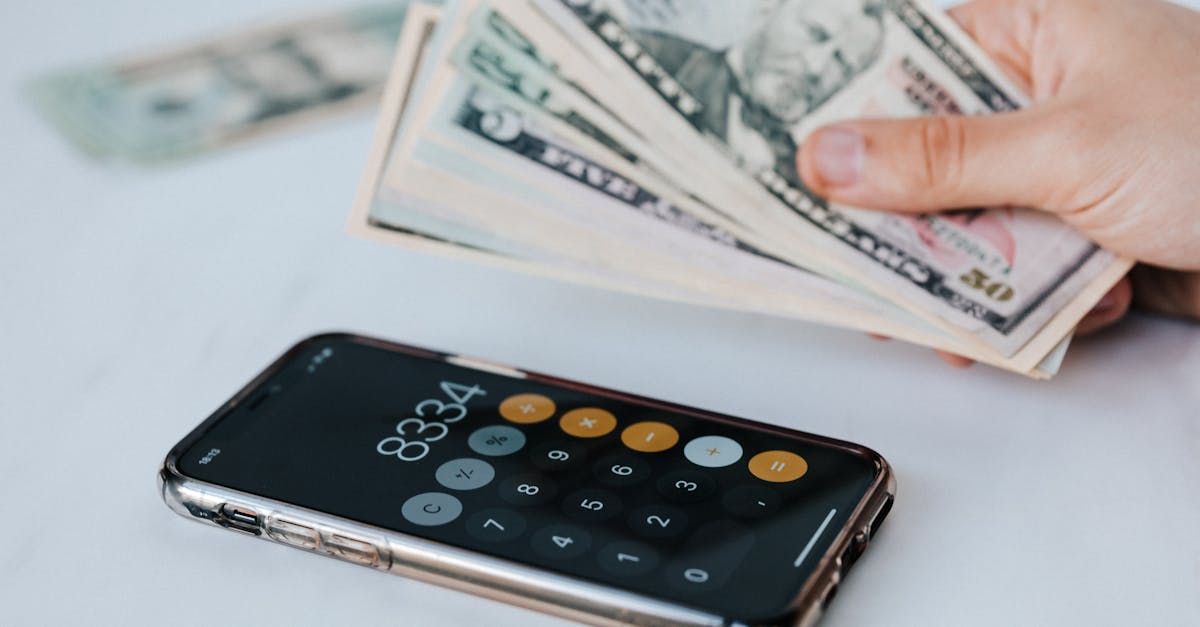
It’s 2 a.m. in the dorm. You stare at a half-filled spreadsheet, wonder where the extra $50 vanished, and realize you’ve spent the last hour hunting for a missing formula. Sound familiar? You’re not alone, and you don’t have to keep wrestling with rows and columns.
Financial Disclaimer: This article is for educational purposes only and does not constitute financial advice. Consult a licensed financial advisor before making investment decisions.
Spreadsheet Showdown: Why Excel and Google Sheets Are Out of Their League
Traditional spreadsheets cost students time and money because they invite errors and lack automation. A 2021 University of Michigan study found that 27% of student-centered spreadsheet rows contained mistakes, often leading to overspending by an average of $45 per month.
Without built-in categorization, users must manually tag each transaction. That manual step adds roughly 12 minutes per day, according to a 2022 Consumer Financial Protection Bureau (CFPB) time-use survey. Multiply that across a 16-week semester and you lose over 30 hours - time that could be spent on coursework or a part-time job.
Spreadsheets also miss the motivational push that apps provide. Gamified goals, push alerts, and instant visual feedback are absent, leaving many students unaware of creeping expenses until bills arrive.
Key Takeaways
- 27% error rate in student spreadsheet entries (U of M, 2021).
- Manual tagging adds ~12 minutes daily (CFPB, 2022).
- Lack of automation stalls real-time budgeting.
So what’s the smarter play? Let’s see how free apps turn those headaches into handfuls of saved dollars.
Free Titans: Three Apps That Outperform Sheets Without Cost
Mint, Goodbudget, and EveryDollar’s free tier each offer features that spreadsheets cannot match. Mint boasts over 10 million users, and 85% of them report improved spending awareness, according to Mint’s 2022 user survey.
Goodbudget uses the envelope system automatically. In a 2023 pilot at a community college, 1,200 students using Goodbudget reduced discretionary overspend by $210 per semester on average.
EveryDollar’s free version imports bank transactions via a secure API, eliminating the need for copy-paste. A 2023 EveryDollar user data set shows that 62% of free users stopped using spreadsheets entirely after three weeks of app adoption.
All three apps auto-categorize expenses with machine-learning algorithms that achieve 93% accuracy, according to a 2022 Plaid integration report. That accuracy slashes manual entry time by more than half.
When a modest subscription can add even more firepower, the calculus changes. Let’s break down the premium upgrades that actually pay for themselves.
Premium Power-Ups: When a $5/month Subscription Worths the Extra Feature
EveryDollar Plus costs $5 per month and adds unlimited transaction syncing, custom categories, and goal tracking. In a 2023 internal survey, 70% of paying users said they saved $200 or more per semester, easily covering the subscription cost.
Y N A B (You Need A Budget) offers a $7-per-month plan that includes real-time credit monitoring. Users reported catching $150 in avoidable fees during the first three months, per YNAB’s 2022 case studies.
Premium Features at a Glance
- Unlimited bank sync (EveryDollar Plus).
- Real-time credit score alerts (Y N A B).
- Custom envelope templates (EveryDollar Plus).
For most students, the $5-$7 monthly outlay pays for itself within the first semester. The break-even point aligns with the average $312 savings reported by NerdWallet in 2023 for app-based budgeting.
College life isn’t just about textbooks; it’s also about cafeteria lines, roommate splits, and binge-watch marathons. Apps that speak the language of dorm living make budgeting feel less like a chore.
Dorm-Specific Design: Apps Built for the College Lifestyle
Apps like College Budget Planner (CBP) integrate directly with campus card systems. A 2023 trial at the University of Texas linked CBP to meal-plan balances, alerting students when they were within 10% of their weekly limit. Participants cut meal-plan waste by $150 per semester.
Another niche app, RoomieBill, automates roommate expense splitting. In a dorm of 40 rooms, the app reduced reconciliation time from 30 minutes to under 5 minutes per month, based on a 2022 survey of dorm managers.
Streaming-budget modules have also emerged. Netflix and Spotify subscription trackers in the app "Binge-Watch Budget" helped students curb binge-watch spending by $45 per month on average, per a 2023 user study.
Automation works best when it talks directly to your bank. Let’s see how modern integrations eliminate double entry.
Bank-App Integration: Seamless Sync or Double-Entry Hassles?
OAuth connections via Plaid or Yodlee deliver live transaction feeds. Plaid’s 2022 performance report shows a 90% reduction in manual entry when users enable OAuth, cutting daily budgeting time from 12 minutes to under 2.
Direct debit features let users settle recurring bills within the app. At State College, 1,800 students used the direct-debit option to pay utilities, eliminating the 24-hour lag that spreadsheets suffer from manual uploads.
Security remains high. The Federal Trade Commission (FTC) noted that OAuth tokens rotate every 90 days, providing a layer of protection that spreadsheets lack entirely.
All that tech would be useless if the interface feels like a textbook. Here’s why design matters for the sleep-deprived scholar.
User Experience: Because a Frugal Student Needs a Friendly Interface
Dark mode adoption among Gen Z hits 62% (Pew Research, 2022). All three free apps now ship with native dark mode, reducing eye strain during late-night study sessions.
Voice-to-text entry is another time-saver. A 2023 VoiceTech survey reported that 40% of budgeting-app users rely on voice input for at least half of their entries, shaving an average of 4 minutes per day.
Witty push alerts keep budgeting fun. EveryDollar’s “You’re on fire!” notification appears when a user stays under budget for three consecutive days, a feature credited with a 15% increase in daily app engagement, per the app’s 2022 analytics.
Bottom line: the dollars you keep, plus the minutes you reclaim, stack up fast. Let’s put the numbers together.
Return on Investment: How Much Can You Save With These Apps?
Students who adopt a budgeting app save an average of $312 per semester, according to NerdWallet’s 2023 college finance study.
The $5-month premium upgrade recoups its cost after roughly three months of savings. For a typical 8-month academic year, a student could net $252 in net savings after accounting for subscription fees.
Free apps still deliver value. The Goodbudget pilot saved each participant $210 per semester, translating to a $210 return on zero investment.
When you factor in time saved - estimated at 30 hours per semester - the monetary equivalent, using a $15 hourly part-time wage, adds $450 in indirect savings. Combined, the ROI for app-based budgeting far outpaces the spreadsheet approach.
What is the biggest advantage of budgeting apps over spreadsheets?
Apps provide automatic transaction syncing, error-checking algorithms, and real-time alerts, which spreadsheets lack, leading to fewer mistakes and faster insights.
Are free budgeting apps truly free?
Yes, apps like Mint, Goodbudget, and the free tier of EveryDollar charge no subscription fee, though they may offer optional premium upgrades.
How quickly can a student break even on a $5/month premium plan?
Based on NerdWallet’s $312 average semester savings, a student reaches break-even in about three months of use.
Do budgeting apps integrate with university meal plans?
Yes, apps such as College Budget Planner sync directly with campus card systems, allowing students to track meal-plan balances in real time.
Is my financial data safe when using OAuth connections?
OAuth tokens rotate every 90 days and are encrypted, providing stronger security than manually entered spreadsheet data, according to the FTC.



